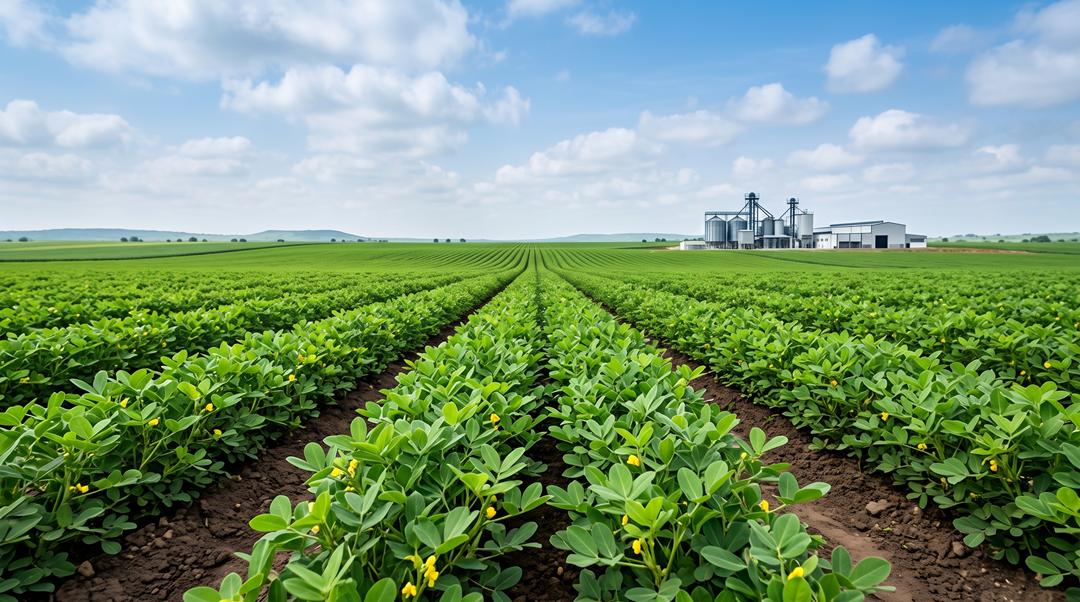
India’s total groundnut production is projected to expand steadily, reinforcing the nation’s position as a premier supplier of edible peanuts to world markets. Favorable monsoon coverage and remunerative crop returns have encouraged farmers in key growing regions to expand peanut acreage.
Expanded Acreage and Favorable Yield Projections
According to the latest report from the USDA Foreign Agricultural Service (FAS), India’s groundnut production is projected to reach approximately 7.75 million metric tons (MMT) for the 2026 season. Harvested acreage is expected to grow by nearly two to three percent to roughly 5.7 million hectares, up from 5.6 million hectares in the prior season. Farmers in primary growing belts such as Gujarat and Rajasthan have progressively shifted land from cotton to groundnuts, attracted by consistent domestic minimum support prices and strong export demand for Bold, Java, and TJ peanut variants.
Quality Compliance and Export Traceability via APEDA
Parallel to volume growth, Indian export processing infrastructure is advancing through digitized quality oversight. APEDA’s Peanut.Net platform continues to streamline laboratory testing, aflatoxin certification, and supply chain traceability for European, British, and Middle Eastern shipments. With yield expectations holding stable around 1.33 MT per hectare, processors are anticipating clean crop quality, which will support high recovery rates for blanched and blanched split peanut production.
Position in European and Southeast Asian Markets
The forecasted output expansion ensures that Indian exporters will have ample physical volume to meet seasonal spikes in demand across key destinations like the EU, the UK, Malaysia, and Vietnam. Higher availability of export-grade raw nuts will enable processing facilities in Gujarat to scale up blanching operations to fulfill strict EU aflatoxin specifications.
Key Takeaway for Peanut Exporters:
Rising groundnut acreage in Gujarat ensures a robust supply of high-grade raw peanuts, giving exporters the leverage and volume required to expand long-term contracts with European and Asian buyers.
Sources: USDA Foreign Agricultural Service (FAS) Grain and Oilseeds Update, Business World