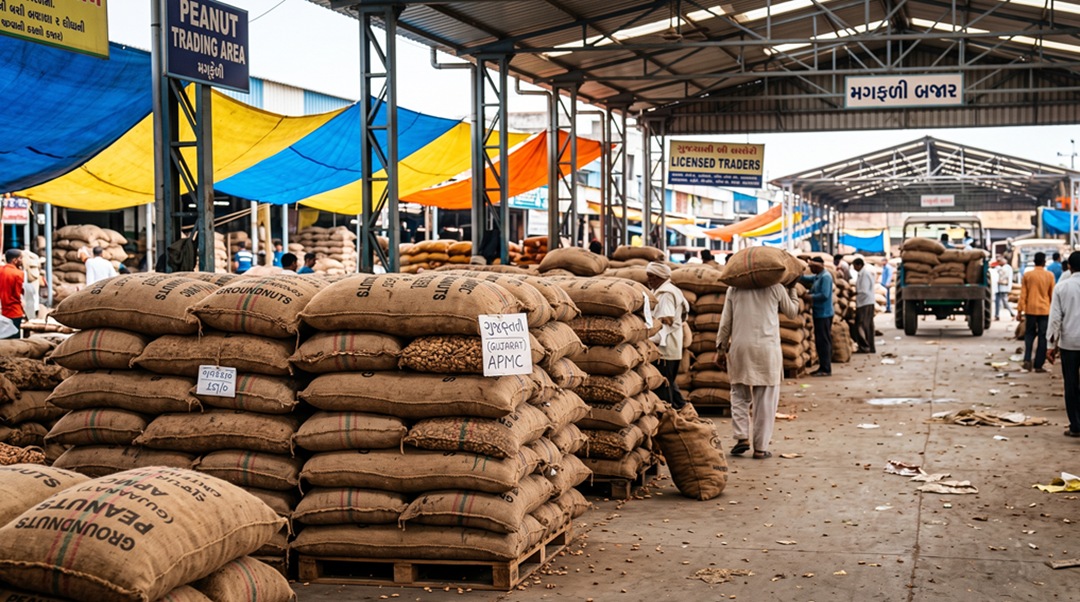
Indian peanut prices have seen a welcome stabilization recently as favorable monsoon progression in Gujarat brightens the kharif crop prospects. Additionally, newly approved government procurement at Minimum Support Prices (MSP) is putting a firm floor under grower returns, which directly impacts the export pricing landscape for Indian suppliers.
Recent Market & Weather Developments
According to recent market intelligence reports from the Commodity Board and Rajkot APMC data, bold groundnut prices have averaged around ₹7,000 per quintal in early August 2026. Favorable monsoon conditions in major growing regions like Gujarat and Rajasthan have significantly improved crop development, mitigating fears caused by previously uneven rainfall patterns. Simultaneously, the Indian government has authorized substantial state-level procurement of oilseeds and pulses under the Price Support Scheme, allocating significant purchasing volumes in states such as Uttar Pradesh. This critical government intervention is designed to reduce the supply of distressed groundnuts entering the open market, thereby stabilizing the domestic baseline price for farmers across the region.
Market Impact or Analysis
The MSP-backed procurement is effectively capping the downside risk for the broader market, ensuring that prices do not collapse under harvest pressure. While there have been fractional week-on-week declines in some processed export grades—with Java 70-80 quoted near EUR 1.03 per kilogram FOB New Delhi and roasted splits around EUR 1.09 per kilogram—the overall market is maintaining a steady sideways trend. This stability is crucial as global buyers navigate a complex trading environment. The improved weather in Gujarat provides fundamental support for the upcoming harvest volume, provided there are no late-season flooding events. Stable raw material costs allow processors to plan their production schedules with greater confidence.
India Export Perspective
For Indian peanut exporters, particularly those targeting price-sensitive markets in Southeast Asia and quality-conscious buyers in Europe, the current pricing environment offers an excellent opportunity to secure forward contracts. With FOB values holding steady, companies can confidently quote competitive prices for nearby shipments in September while retaining some flexibility for the fourth quarter. The ongoing government support ensures that the raw material supply remains economically viable without triggering massive price volatility that could disrupt established international trade relationships.
Key Takeaway for Peanut Exporters:
Exporters should consider locking in September shipments at current FOB levels for premium Java grades, while maintaining Q4 flexibility in case of yield-driven price drops.
Sources: Commodity Board, Rajkot APMC Data