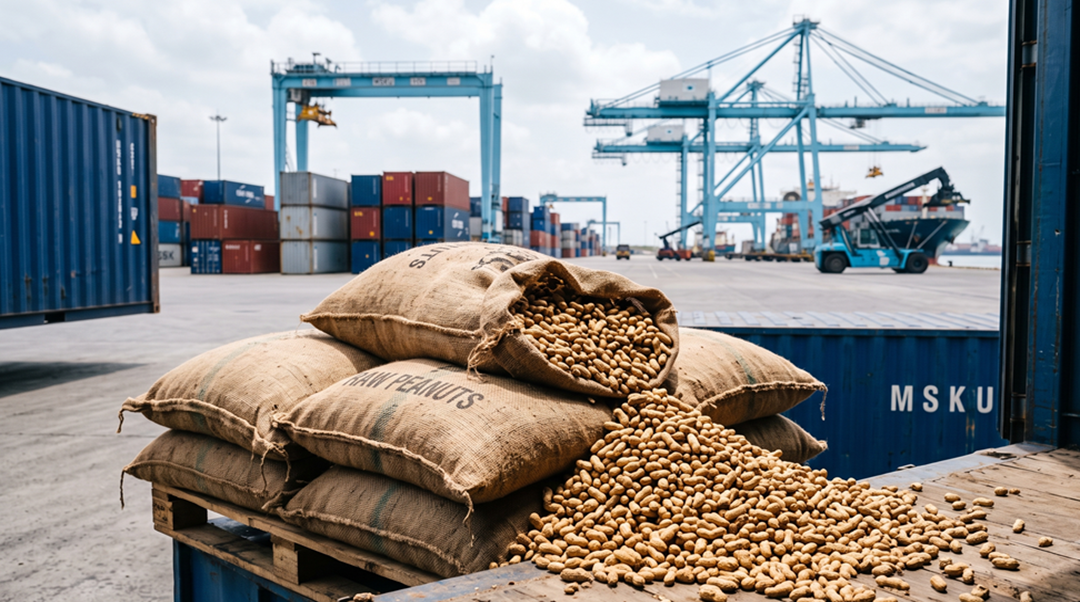
Market fundamentals for Indian oilseeds are undergoing a major shift as proactive state interventions intersect with key monsoon developments across western India. The upward movement of Indian peanut export prices has taken hold over the last two weeks, establishing a resilient price floor that is directly altering forward supply commitments for global buyers. This trend comes as overseas procurement networks closely evaluate crop availability out of major exporting hubs.
Government Interventions and Procurement Drive
According to the latest agricultural market report from Commodity Board, Indian peanut export values have firmed since late June due to aggressive government market interventions. The central authorities have expanded the Minimum Support Price (MSP) framework for the summer oilseed crop, authorizing massive groundnut procurement quotas across key producing states including Uttar Pradesh, Gujarat, Tamil Nadu, and Haryana. This aggressive buyback initiative effectively removes lower-grade crushing materials from the open commercial market, preventing local traders from discounting stock and forcing private processors to pay higher premiums to secure export-quality kernels.
Shifts in FOB Benchmarks and Pricing Trends
The operational impact of this policy shift is visible across export offers departing western Indian maritime gateways. Trade data indicates that Bold 40–50 count peanuts from Gujarat are currently trading around EUR 1.08 per kilogram on a Free On Board (FOB) basis, marking a clear step up from the EUR 1.05 per kilogram benchmark observed in mid-June. Similar incremental gains of EUR 0.01 to EUR 0.03 per kilogram have been reported across smaller Bold 50–60 and 60–70 grades, alongside a symmetric rise in Java-type peanut kernels. Value-added processing lines are mirroring this upward trajectory, with roasted split variants maintaining tight spreads.
India Export Perspective and Strategic Outlook
For regional merchant trading entities managing cross-border transactions, this structural baseline requires an immediate re-calibration of pricing strategies. While a recovering monsoon across key agricultural belts has mitigated severe crop deficit risks, the domestic supply availability remains tightly linked to these government-backed price supports. Buyers across traditional target destinations such as Bangladesh and Southeast Asian procurement networks are encountering firm resistance to lower bids, given that domestic crushers possess a reliable state outlet. Exporters must emphasize quality sorting and strict compliance parameters to justify these elevated FOB positions in competitive environments.
Key Takeaway for Peanut Exporters: Exporters should adjust their short-term forward contract valuations upward to reflect the new MSP-driven price floor and secure raw inventory early before procurement targets tighten spot availability. Sources: Commodity Board (https://commodity-board.com/india-s-msp-push-lifts-floor-under-peanut-prices-as-monsoon-recovers)