The international peanut trade is experiencing an influx of predictable volumes as South American production cycles return to a standardized cadence following multi-year cyclical disruptions. The broader normalization of the Argentina peanut market is introducing a high degree of structural predictability for major industrial buyers located across the European Union and the United Kingdom. This stabilization is altering the purchasing behavior of manufacturing conglomerates who had previously maintained diversified origin portfolios.
Planted Acreage Rebound and Yield Forecasts
An operational analysis published by the Commodity Board confirms that Argentina’s agro-industrial peanut sector is effectively normalizing after a sequence of sharp boom-and-bust supply swings. For the current marketing year, agricultural economists project a total raw groundnut production volume of approximately 1.5 million metric tons (MMT). This supply expansion is backed by a modest recovery in total planted area to 420,000 hectares, driven primarily by long-term contract security from major processors and favorable localized input costs relative to commercial corn production. Cultivation remains concentrated within the traditional agricultural core, with the Córdoba province generating roughly 68 percent of total output.
Industrial Processing Adjustments and Export Shifting
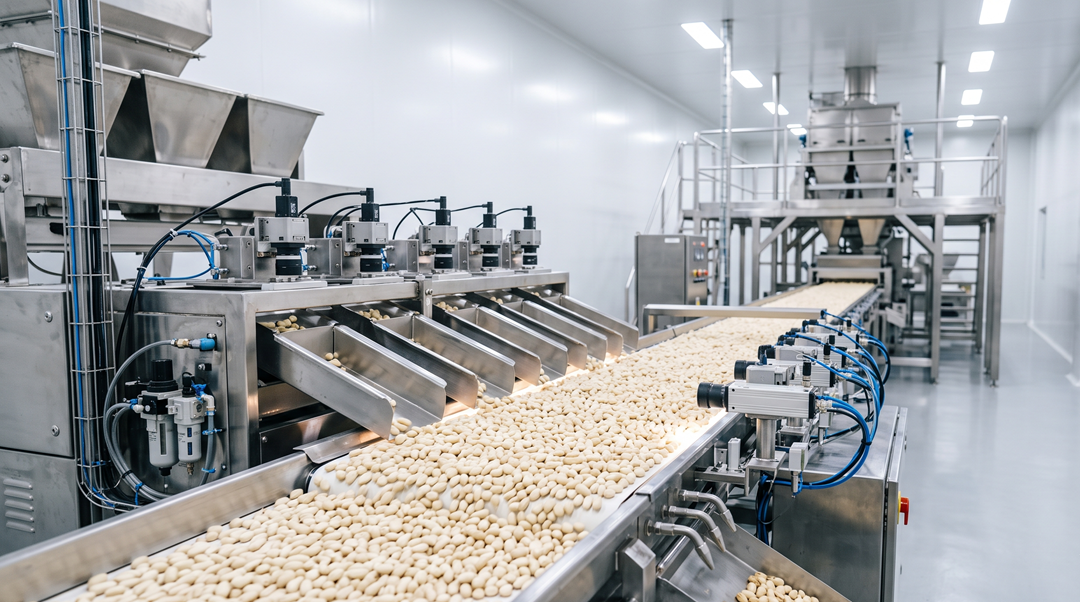
A defining element of the current South American crop cycle is the massive expansion of domestic value-addition infrastructure within the originating zones. Driven by changing economic policies, processors are rapidly expanding local blanching facilities and crushing lines, aiming to capture higher industrial margins rather than shipping raw, unprocessed pods. Simultaneously, export pressures have eased slightly due to softer overall import demand from Chinese crushing mills, which are dealing with high domestic inventories of lower-grade oilstock. This domestic pivot ensures that high-grade blanched peanuts remain readily available for contract delivery to highly regulated premium western markets.
India Export Perspective and Competitive Positioning
The stabilizing supply out of South America establishes a highly rigid competitive ceiling for Indian agricultural trading firms dealing in similar product lines. With Argentine farm-level contract values holding steady near USD 600 per metric ton, international blanched peanut pricing has flattened out in European currency terms. Indian exporters dealing in Java and Bold varieties must realize that aggressive price hikes will immediately prompt Western European buyers to lean heavily on Argentine supply chains. To maintain market share in regions like the Netherlands or Germany, domestic operations must leverage logistical speed and smaller minimum order volumes.
Key Takeaway for Peanut Exporters: Exporters must anticipate highly stable, cost-competitive South American blanched offers in European markets and look to secure market dominance in Southeast Asian and Middle Eastern corridors.
Sources: Commodity Board (https://commodity-board.com/argentina-peanuts-stabilize-as-exports-ease-and-processing-capacity-grows)