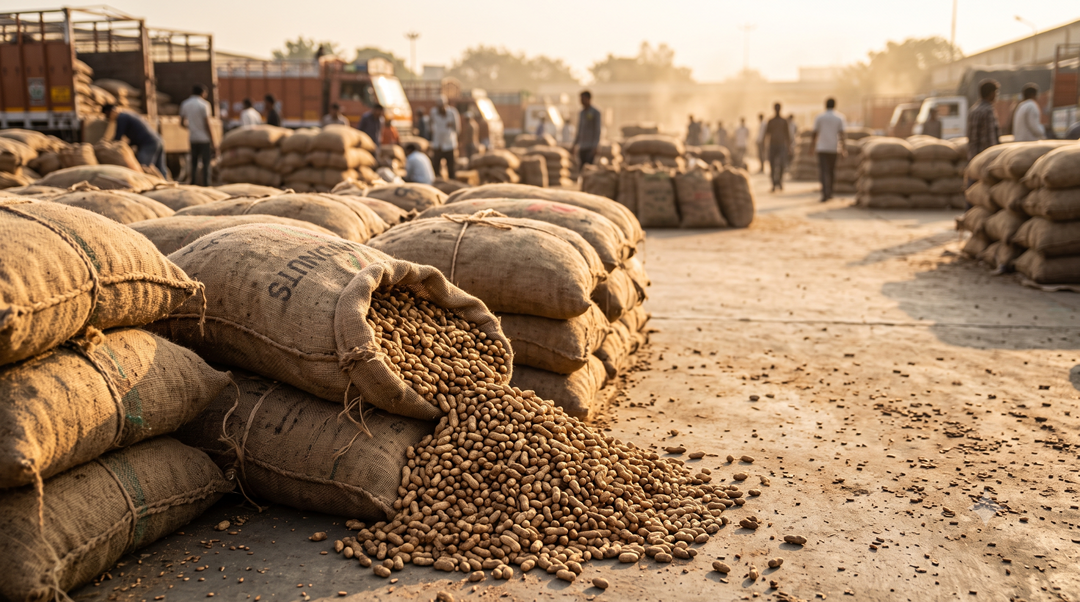
The initial phase of the Indian agricultural season is facing immediate challenges as erratic weather patterns delay critical field operations. A weak and uneven onset of the southwest monsoon has severely hampered kharif groundnut sowing across major producing states, creating an immediate ripple effect through regional physical trading centers. According to the latest field data compiled by the Commodity Board, nationwide planting progress for oilseeds has experienced a marked slowdown, leaving traders to re-evaluate their near-term supply projections for raw commodities.
Monsoon Deficit Curbs Planted Acreage
The primary challenge stemming from the current weather pattern is the steep drop in early-season coverage. Data indicates that the nationwide kharif groundnut sowing area has fallen by approximately 22% to 23% compared to the corresponding period last year. In Gujarat, which serves as the hub for export-grade processing, fields are experiencing critical delays. Sowing registries confirm that only about 15% of the normal baseline acreage has been planted so far. Farmers in major groundnut belts, including Rajkot, Junagadh, and Jamnagar, are intentionally delaying seeding operations upon the direct advice of agricultural universities, choosing to wait until soil moisture levels stabilize under more consistent precipitation patterns.
Mandi Prices Firm on Tighter Expectations
This visual slowdown in field coverage has translated directly into bullish sentiment across physical trading floors. In Gujarat APMC mandis, spot arrivals of old-crop stocks are dwindling, forcing prices upward. While minor variations exist across specific trading hubs, average groundnut seed rates in centers like Palanpur have consolidated at higher levels, around ₹8,105 per quintal. Meanwhile, standard commercial varieties in local mandis like Halvad and Jamnagar are regularly changing hands between ₹6,650 and ₹7,625 per quintal. This baseline price support is further reinforced by the Indian government’s expanded Minimum Support Price (MSP) procurement net, which effectively blocks any steep downward corrections.
India Export Perspective
For merchant exporters operating out of western India, this domestic price surge directly increases the procurement cost for raw cargo. FOB export quotes out of Mundra and Kandla ports are exhibiting a firming trend. The benchmark price for Gujarat Bold peanuts (40–50 count) has edged upward to approximately EUR 1.08 per kilogram, climbing from the EUR 1.05 level observed in mid-June. Java varieties are mirroring these incremental gains. Importers in South Asian nations like Bangladesh and major buyers in the Middle East are closely monitoring these price shifts, with some choosing to advance their contracts to hedge against potential new-crop shortages.
Key Takeaway for Peanut Exporters:
Exporters should lock in current available old-crop stocks immediately, as ongoing kharif sowing deficits will keep domestic procurement costs high and push export FOB offers upward throughout July.
Sources: Commodity Board (commodity-board.com), Mandi Pulse Live Reports (mandipulse.com)